Project Introduction
This project focuses on key material challenges in semiconductor manufacturing systems and organizes regular academic seminars and exchange activities. These activities cover areas such as materials science, electron optics, and semiconductor equipment, promoting interdisciplinary collaboration among researchers and facilitating effective alignment between research directions and practical needs.
This seminar series will be continuously conducted as an integral part of the project's communication and exchange framework.
Invited Talks
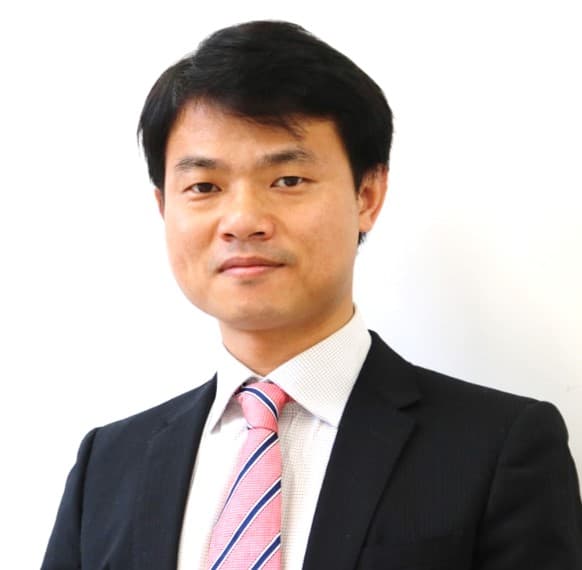
Abstract: Energy discrimination of secondary electrons (SEs) and backscattered electrons (BSEs) in scanning electron microscopy (SEM) provides information that has previously been difficult to obtain. For SEs, it is expected to enable the measurement of surface potential differences, while for BSEs, it facilitates the observation of buried structures. This energy discrimination has been made possible by the "fountain detector" and the MCP (microchannel plate) detector equipped with an energy filter. In this presentation, I will describe the characteristics of these detectors and introduce the following achievements obtained through their use:
(1) Observation of defects and impurity concentrations in polycrystalline B-doped diamond via SE spectroscopy.
(2) Observation of Bi particle distribution in Al polycrystals via BSE spectroscopy.
(3) Observation of contamination at the Al/Si Schottky interface.
Speaker: Professor Xuefeng Liu
Institution: Tokyo Woman's Christian University
Date: March 10, 2026 16:00
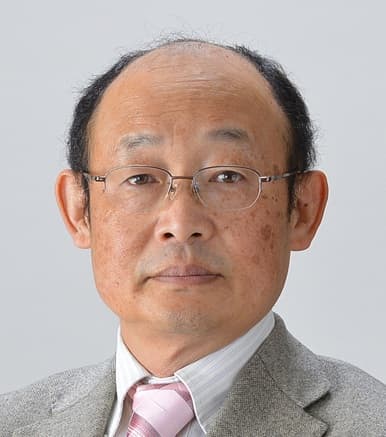
Abstract: Accurate resistivity measurement of semiconductor wafers with nonstandard geometries, such as notches and orientation flats, remains challenging, particularly near wafer edges where shape variations introduce significant systematic error. Standard JIS-based procedures are not designed to accommodate these local geometric deviations, limiting achievable accuracy in edge-proximal measurements.
We present a finite element method (FEM) simulation framework that models the four-point probe configuration and the wafer's actual edge geometry to compute a robust, high-resolution correction factor for measured resistance. The resulting FEM-derived correction enables precise and repeatable resistivity evaluation across wafers of varying shapes, including regions close to notches and cut edges.
In this talk, we describe the modeling methodology, validation through practical measurements, and representative application cases, and we briefly discuss the associated patent.
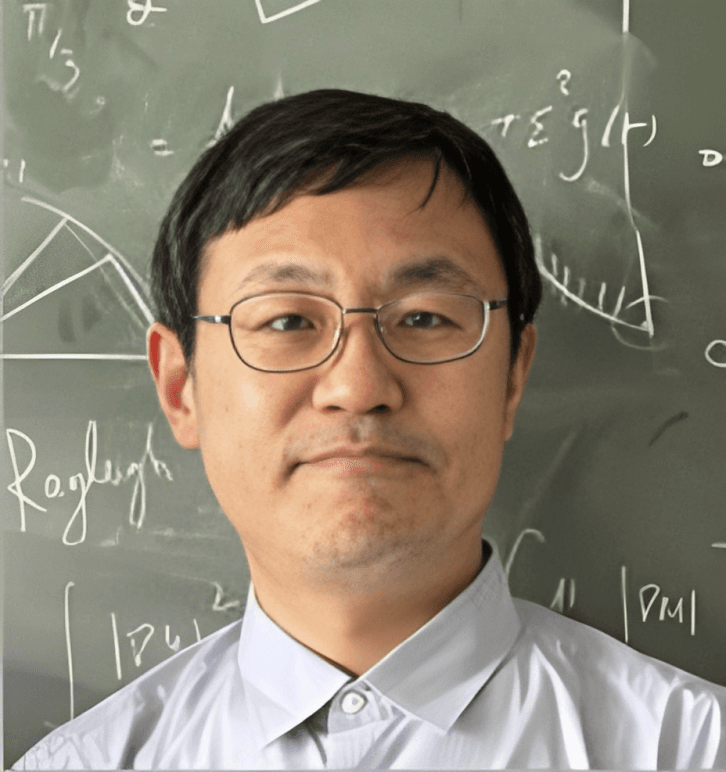
Investigation for high-performance of semiconductor thermoelectric materials and TiO2 photocatalyst
Experiments and first-principles calculation
Abstract: I will give a presentation on research results by experimental and first-principles calculations for the performance enhancement of semiconductor thermoelectric materials and TiO₂ photocatalysts over many years. First, I will talk the research background, followed by an introduction to experiments and first-principles calculations for TiO₂₋᙮ and TiₙO₂ₙ₋₁ thermoelectric materials, alongside experiments and first-principles calculations for TiO₂₋᙮ photocatalysts. First-principles calculations are highly effective for analysis of the mechanisms behind enhancing the performance of both thermoelectric materials and photocatalysts. Furthermore, I will introduce the use of first-principles calculations for selecting candidate materials within the Ni-M-Al Heusler alloy thermoelectric material family. The presentation will be in Japanese.
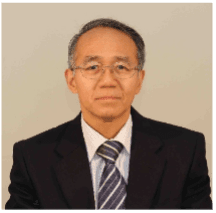
Playing with elements: Focus on High Entropy Alloys
First-principles and Machine Learning
Abstract: The diversity of materials world arises from the myriad combinations of composition and atomic configuration built upon more than one hundred chemical elements. High entropy alloy (HEA) is a novel class of materials formed by mixing relatively large proportions of multiple principal elements. This unconventional design paradigm of treating elements has led to various unusual properties and the rapid emergence of a vibrant research field.
This talk presents a series of our studies starting from two quinary HEAs: the Cantor alloy FeCoNiCrMn and FeCoNiCrPd, synthesized by intentionally substituting Mn with Pd, which exhibits significantly higher strength than the original Cantor alloy. Using first-principles calculations (DFT), we revealed the mechanism of the enhancement of mechanical properties by Pd substitution, and explained the large fluctuation atomic fractions in Pd-HEA. This work is further extended to various Cantor-derived systems to uncover the origins of several intriguing physical phenomena, including some quaternary alloys exhibiting record-high magnetic moments among known HEAs, and six-element systems in which the partial chemical disordering takes an important role in phase transformations behavior. In parallel, by combining more than 1,000 DFT data accumulated during this work with machine learning, we predicted several new Cantor-derived compositions with superior physical properties. To explore a broader compositional space from the limits DFT data, we further employed data augmentation based on generative AI (GAN) and the physics method cluster expansion (CE). These studies deepen our understanding of the physics of high-entropy alloys and provide new pathways for the accelerated discovery of advanced multi-principal-element materials.
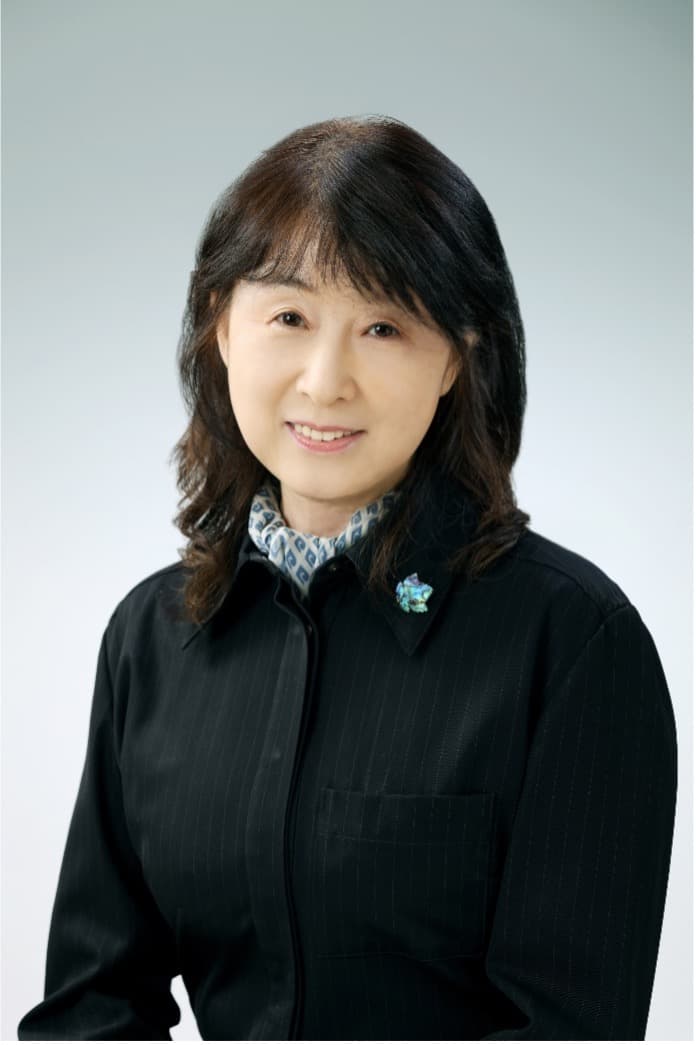
High resolution characterizations of fine structure of semiconductor device and material using scanning nonlinear dielectric microscopy
The World of 10⁻²² F/√Hz
Abstract: Scanning Nonlinear Dielectric Microscopy was developed as a microscope to visualize ferroelectric polarization distribution. Since nonlinear dielectric phenomena in dielectrics are extremely small, SNDM was designed from the outset with world-leading sensitivity capable of detecting capacitance changes as small as 10⁻²² F/√Hz, making it highly effective for semiconductor measurements as well.
The lecture will briefly outline the measurement principle before focusing on MOS interface analysis and carrier distribution observation in atomic-layer semiconductors to explain the latest research findings.
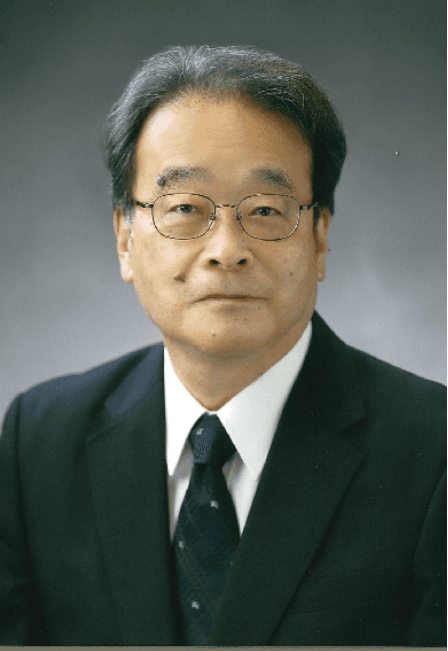
Speaker: Associate Professor Jianfeng Cheng
Date: February 24, 2026 13:00
Abstract: Solid-state lithium metal batteries present a central materials challenge for next-generation energy storage, requiring control of ionic transport, mechanical integrity, and interfacial stability. Among solid electrolytes, Li-stuffed garnet oxides are attractive due to their high Li-ion conductivity, chemical stability against lithium metal, and wide electrochemical stability window compatible with high-voltage cathodes. However, practical implementation remains limited by processing and interfacial issues, including densification of large-area electrolytes, lithium dendrite penetration, and high-resistance solid-solid contacts.
In this talk, I will present our recent materials-focused studies on Li-stuffed garnet electrolytes, highlighting sintering and microstructural control and interfacial engineering strategies. By linking processing, microstructure, and interfacial behavior, we aim to clarify the key materials factors governing stability and failure in garnet-based systems. Finally, I will discuss remaining challenges and future directions toward the practical realization of solid-state lithium metal batteries.